

To identify which U.S. older adults aging in place are at risk of having their care needs go unmet, researchers are probing the severity of their limitations and their caregivers’ characteristics. They are finding patterns—related to disability types, how rapidly care needs increase, and how well care is matched with needs. They are also examining trends that will shape future care needs as the older share of the U.S. population grows rapidly.
Family Members and Friends Face Challenges Meeting Older Adults’ Care Needs
A mismatch between types of difficulty and assistance can lead to adverse consequences reflecting unmet care needs, report Jyoti Savla and Zhe Wang of Virginia Tech.1 Using nationally representative data from the National Health and Aging Trends Study (NHATS), they tracked more than 3,000 U.S. Medicare recipients, grouping them based on the kinds of physical and cognitive limitations they had and their caregiver sources, then examining their unmet needs one year later.
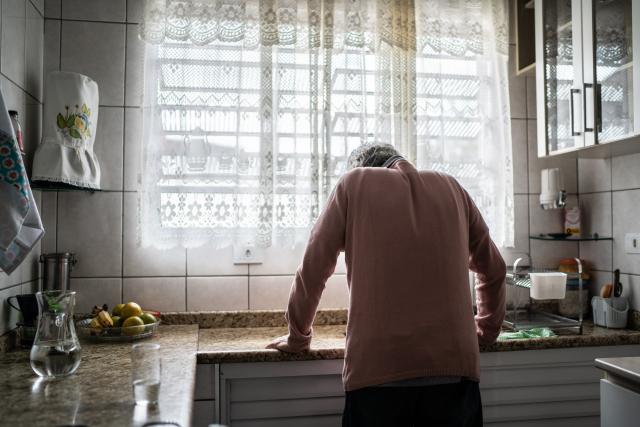
Unmet care needs are the negative consequences occurring when an older adult cannot complete a daily activity because no one is available to help—such as missing medication, sitting in soiled clothing, or skipping meals. Unmet needs were higher when the help people received did not match what they needed; for example, requiring help with bathing or dressing, but receiving meals or house cleaning assistance.
Those who rely mainly on friends and neighbors and use few paid services frequently have high unmet needs, Savla and Wang emphasize. This situation often leads to relocation: They point to another recent study based on NHATS data that shows that older adults with friend-heavy care networks face high odds of moving to a residential care facility or nursing home.2 The study led by Natasha Nemmers at Wayne State University underscores the “limits to purely non-kin support,” Savla and Wang write.
Pace of Increasing Need and Features of Evolving Caregiver Networks Also Play a Role
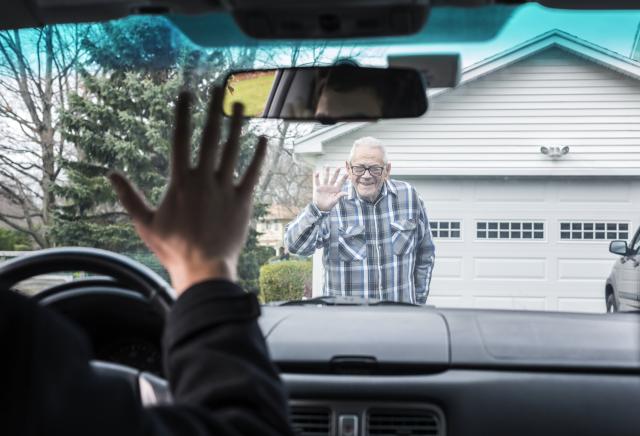
Some types of care networks have difficulty responding to rapidly rising needs for assistance, show Vicki Freedman of the University of Michigan, consultant Jennifer Cornman, and Jennifer Wolff of Johns Hopkins University.3 The team tracked more than 1,000 older adults and their 4,000+ caregivers using six years of NHATS data, examining unmet care need at annual intervals.
Older adults with steeply rising care needs are more likely to have unmet needs if their caregivers are transient (gone after a year) or provide very low, stable care hours (fewer than 6 hours per month), they find. But older adults with rapidly rising needs face better odds of receiving the help they require if they have a care team that includes at least one person providing medium, stable care hours (40-67 hours per month) and another providing a high number of variable hours (190-330 hours per month).
The researchers also show that the frequency of unmet care needs also differs by the number and stability of care needs. Older adults with few (1-2) stable needs report unmet care needs 13% of the time whereas those with many (3-10) needs report unmet care needs 62% of the time.
More Support, Access to Paid Help, More Thorough Network Assessments Could Improve Care

To better support older adults with care networks made up mainly of kin, Savla and Wang recommend providing assistance with formal care coordination from professional health care workers and respite care for their unpaid caregivers to avoid strain. For those with non-kin care networks, they recommend that stakeholders promote and expand paid services to raise the knowledge of and use of paid care. To avoid care mismatch, they argue for regular assessments by health professionals to better align services with needs.
Crucial to preventing unmet need is assessing an individual’s entire care network in the face of rapidly increasing needs, such as “a debilitating diagnosis or function loss following a stroke, fracture or other acute event,” argue Freedman, Cornman, and Wolff. But most assessments that are done in health care settings focus on the one caregiver attending the health visit. The research team suggests that “identifying and assessing the evolution of the full care network, including transient helpers, may be a fruitful direction for addressing unmet care needs in later life.”
Care Needs Projected to Increase 25% by 2040
Many observers point to shrinking families—fewer children, more divorce, more people aging without spouses or close kin—as the root of America’s caregiving shortage. But a new study demonstrates that this view misses a bigger demographic force driving the rising care gap—rapid growth in the share of Americans reaching the oldest ages when care needs increase.4
A team of researchers led by Freedman combined NHATS data on care needs with projections of future family structures through 2040. Their analysis projected care needs will rise nearly one-quarter (23%) over 2022 levels: By 2040 roughly 7.7 million older adults are expected to need care but no family caregiver, while about 14 million may experience unmet need for care. Shifts in family composition—such as rising childlessness, more stepfamilies, or smaller families—added relatively little to projected care gaps, the researchers document.
“Age structure shifts will put upward pressure on the demand for paid care,” the researchers write, noting that the home-care workforce has not kept pace with the demand.
“[R]eshaping paid long-term care options and providing supports to family caregivers are essential—not because of decays in family life—but because of the sizeable gaps in the current patch work and piece meal system of caring for older adults in the United States,” the researchers argue
1 Jyoti Savla and Zhe Wang, “Older Adults' Care Networks and the Pathways to Unmet Needs,” Innovation in Aging 9, no. (2025) https://doi.org/10.1093/geroni/igaf063
2 Natasha Nemmers, Wenhua Lai, Sophia Tsuker, Srabani Haldar, Vicki A. Freedman, and Amanda N. Leggett, “Examining Care Network Characteristics in Older Adults' Relocation to Residential Care Settings,” Innovation in Aging 8 (2024) https://doi.org/10.1093/geroni/igae087
3 Vicki A. Freedman, Jennifer C. Cornman, and Jennifer L. Wolff, “Caregiving Trajectories and Unmet Care Needs in Later Life,” The Gerontologist 65, no4 (2025) https://doi.org/10.1093/geront/gnae136
4 Vicki A. Freedman, Rachel Margolis, Ashton M. Verdery, Emily M. Agree, and Esther M. Friedman, “The Future Availability of Family Caregivers: Implications for Late-Life Care Gaps,” Population Research and Policy Review 45, no. 3 (2026). https://doi.org/10.1007/s11113-026-10016-4